
The aim of this study was to evaluate the antibacterial and antioxidant properties of three samples from aqueous extracts of Cochlospermum planchonii leaves and the white tips of Agama agama feces. The phytochemical analyses were carried out by HPLC and spectrophotometric assays. The antioxidant activity was carried out by the DPPH method. As for antibacterial activity, it consisted of determining the inhibition percentage by solid disk diffusion. The Minimum Inhibitory Concentration (MIC) was then determined using the liquid dilution method in sterile test tubes. The phenolic profiles reveal the presence of twelve (12) phenolic compounds identified in the 3 samples E1, E2 and E3. All these phenolic compound showed a significant difference (p ≤ 0.05) when compared with each other. The best antioxidant activity was obtained with sample E2 (80.81 ± 1.36%) compared to vitamin C (59.7 ± 5.11%) used as a reference molecule. Sample E1 gave the best antibacterial activity against the pathogenic strains Stahylococcus aureus (ATCC29213) and Pseudomonas aeruginosa (ATCC27853) with respective MICs of 250 mg/mL and 200 mg/mL. This better efficacy of sample E1 was confirmed by maximum inhibition zones of 14 mm against Pseudomonas aeruginosa and 12 mm against Staphylococcus aureus at the concentration of 500 mg/mL, corresponding to 15.55% and 13% inhibition respectively. This study showed a therapeutic potential of Cochlospermum planchonii and white tips of Agama agama feces as a source of natural antimicrobial and antioxidant agents.
| Published in | Journal of Diseases and Medicinal Plants (Volume 11, Issue 4) |
| DOI | 10.11648/j.jdmp.20251104.11 |
| Page(s) | 113-121 |
| Creative Commons |
This is an Open Access article, distributed under the terms of the Creative Commons Attribution 4.0 International License (http://creativecommons.org/licenses/by/4.0/), which permits unrestricted use, distribution and reproduction in any medium or format, provided the original work is properly cited. |
| Copyright |
Copyright © The Author(s), 2025. Published by Science Publishing Group |
Cochlospermum planchonii, Antioxidant Activity, Antibacterial Activity, Agama agama
Phenolic compounds | E1 | E2 | E3 |
|---|---|---|---|
Gallic acid (µg/mL) | 21.54 ± 0.002a | 21.70 ± 0.001b | 20.74 ± 0.001c |
Protocatechuic acid (µg/mL) | 21.55 ± 0.001a | 21.16 ± 0.001b | 19.80 ± 0.001c |
Catechin (µg/mL) | 16.18 ± 0.001a | 15.34 ± 0001b | 14,44 ± 0,001c |
Chlorogenic acid (µg/mL | 324.1 ± 0.001a | 321.2 ± 0.001b | 324.3 ± 0.001c |
Cafeic acid (µg/mL) | 1113 ± 0.001a | 1014 ± 0.001b | 1916 ± 0.001c |
Pcoumaric acid (µg/mL) | 108.2 ± 0.001a | 106.1 ± 0.001b | 105.3 ± 0.001c |
Homoorientine (µg/mL) | 184.1 ± 0.001a | 18.01 ± 0.001b | 171.5 ± 0.001c |
Rutin (µg/mL) | 25.37 ± 0.001a | 27.37 ± 0.001b | 25.42 ± 0001c |
Quercetin-G (µg/mL) | 57.65 ± 0.001a | 58.11 ± 0.001b | 56.03 ± 0.001c |
Quercetin-dH (µg/mL) | 54.71 ± 0.001a | 51.75 ± 0.001b | 53.77 ± 0.001c |
Cinnamic acid (µg/mL) | 3.241 ± 0.001a | 3.277 ± 0.001b | 3.277 ± 0.001c |
Quercetin (µg/mL) | 1831 ± 0.001a | 1765 ± 0.001b | 1650 ± 0.001c |
Samples | Polyphenols (mg EAG/100g of DM) | Tannins (mg ET/100g of DM) | Flavonoids (mg EQ/100g of DM) | Antioxidant activity (%) |
|---|---|---|---|---|
E1 | 832.2 ± 0.40a | 51.33 ± 0.64a | 315.2 ± 0.09a | 61.24 ± 6.16ns |
E2 | 744.1 ± 0.22b | 0.8400 ± 0.08b | 295.0 ± 0.4195b | 80.81 ± 1,36* |
E3 | 799.2 ± 0.43c | 8.567 ± 0.84c | 302.9 ± 0.12c | 57.98 ± 4.25ns |
Vitamin C | 59.7 ± 5.11 |
Diameters/Percentages of inhibition | Samples | Sample concentrations (mg/mL) | ||||||||
|---|---|---|---|---|---|---|---|---|---|---|
300 | 350 | 400 | 450 | 500 | E | Pe | Tir | |||
Staph a. | D (mm) | E1 | 7 | 9 | 10 | 12 | 14 | 0 | 29 | - |
P (%) | 7.78 | 10 | 11.11 | 13.33 | 15.55 | 0 | 32.22 | - | ||
D (mm) | E3 | 6 | 7 | 7 | 9 | 10 | 0 | 29 | - | |
P (%) | 6.67 | 7.78 | 7.78 | 10.0 | 11.11 | 0 | 3.22 | - | ||
Pseudo a. | D (mm) | E1 | 10 | 10 | 11 | 11 | 12 | 0 | - | 15 |
P (%) | 11.11 | 11.11 | 12.22 | 12.22 | 13.33 | 0 | - | 16.67 | ||
D (mm) | E3 | 7 | 7 | 8 | 8 | 9 | 0 | - | 15 | |
P (%) | 7.78 | 7.78 | 8.89 | 8.89 | 10.0 | 0 | - | 16.67 | ||
HPLC | High Performance Liquip Chromatography |
NaH2PO4 | Monosodium Phosphate |
AA | Antioxidant Activity |
OD | Optical Density |
| [1] | World Health Organization. Global Antimicrobial Resistance and Utilization Surveillance System (GLASS) Report: 2021. Geneva: WHO. |
| [2] | Phaniendra A, Jestadi DB, Periyasamy L. (2015). Free radicals: properties, sources, targets, and their implications in various diseases. Indian Journal of Clinical Biochemistry, 30(1), 11–26. |
| [3] | Ventola, C. L. The antibiotic resistance crisis: Part 1: Causes and threats. P&T: Peer-Reviewed Journal for Forms Management. 2015; 40(4), 277–283. |
| [4] | Lobo V, Patil A, Phatak A, Chandra N. Free radicals, antioxidants, and functional foods: impact on human health. Pharmacognosy Reviews. 2010; 4(8), 118-126. |
| [5] | Abdullahi AA. Trends and challenges of traditional medicine in Africa. African Journal of Traditional, Complementary and Alternative Medicines. 2011; 8(5S), 115-123. |
| [6] | Tra Bi FH, Irié GM, N'gaman KCC, Mohou CHB. (2008). Studies of some therapeutic plants used in the treatment of hypertension and diabetes: two emerging diseases in Côte d'Ivoire. Sciences & Nature. 2008; 5(1), 39-48. |
| [7] | Nacoulma OG. Medicinal plants and traditional medical practices in Burkina Faso: The case of the central plateau [Doctoral dissertation]. University of Ouagadougou, 1996. |
| [8] | Dossou VM, Agbankpé AJ, Hounzangbé-Adoté MS, Sinsin BA. Veterinary use of animal products in the treatment of animal diseases in Benin. International Journal of Biological and Chemical Sciences. 2012; 6(6), 2821-2829. |
| [9] | Karou D, Savadogo A, Canini A, Yameogo S, Montesano C, Simpore J, Colizzi V, Traore AS. Antibacterial activity of Sida acuta alkaloids. African Journal of Biotechnology. 2007; 5(2), 195-200. |
| [10] | Zirihi GN, Mambu L, Guede-Guina F, Bodo B, Grellier PJ. In vitro antiplasmodial activity and cytotoxicity of 33 West African plants used for treatment of malaria. Journal of Ethnopharmacology. 2005; 98(3) 281–285 p. |
| [11] | Kouakou YKF. Evaluation of the anti-inflammatory, antioxidant, and analgesic activities of aqueous and ethanolic extracts of Trema guineensis (Ulmaceae) in the Wistar rat (Rattus norvegicus). Doctoral thesis, Felix Houphouet Boigny University, Abidjan, 145 p. 2016. |
| [12] | Soumahoro KP. Antibiotic and antioxidant activities of aqueous extracts of Cochlospermum planchonii Hook F. leaves, supplemented with Agama agama feces. Master, Peleforo GON COULIBALY University, Korhogo, Cote d’Ivoire, 2025. |
| [13] | Singleton VL, Orthofer R, Raventos RM. Analysis of total phenols and other oxydant substrates and antioxydants by means of Folin-ciocalteu reagent. Methods Enzymol, 1999; 299: 152-178 p. |
| [14] | Meda A, Lamien CE, Romito M, Millogo J, Nacoulma OG. Determination of total phenolic, flavonoid and proline contents in Burkina Faso honeys as well as well as their radical scavenging activity. Food. Chem., 2005; 91: 571-577 p. |
| [15] | Bainbridge Z, Tomlins K, Westby A. Analysis of condensed tannins using acidified vanillin. J. Food Sci. Agric., 1996; 29: 77-79 p. |
| [16] | Choi CW, Kim SC, Hwang SS, Choi BK, Ahn HJ, Lee MZ, Park SH, Kim SK. Antioxydant activity and free radical scavenging capacity between Korean medicinal plant and flavonoids by assay guided comparaison. Plant Sci., 2002; 163: 1161-1168 p. |
| [17] | Lambert RJW, Pearson J. Susceptibilitytesting: accurate and reproducible minimum inhibitory concentration (NIC) values. Journal of Applied Microbiology, 2000; 88(5), 784-790. |
| [18] | Genaro-Mattos TC, Maurio AQ, Rettori D, Alonso A, Hermes-Lima M. Antioxidant activity of caffeic acid against iron-induced Free Radical Generation. A chemical approach. PLoS One, 2015; 10(6), 2015. |
| [19] | David AVA, Arulmoli R, Parasuraman S. Overviews of biological importance of quercetin: a bioactive flavonoid. Pharmacognosy Reviews, 2016; 10(20), 84-89. |
| [20] | Wang L, Zhang Y, Li J. Polyphenol composition and antioxidant activity: A comparative study. Journal of Natural Products, 2019; 82(3), 456–467 p. |
| [21] | Cushnie TPT, Lamb AJ. Antimicrobial activity of flavonoids. International Journal of Antimicrobial Agents, 2005; 26(5), 343–356 p. |
| [22] | Djipa Y, Kouassi K, Kone M. Antioxidant activity of hydroethanolic extracts of C. planchonii (roots), DPPH method. Ivorian Research Bulletin. 2000; 18, 45–52 p. |
| [23] | N’guelfack. Bioflavonoids classification, pharmacological, biochemical effects and therapeutic potential. Indian Journal of Pharmaceutical. 2005; 33: 2–16 p. |
| [24] | Hassan L, Mohamed, El-Hakim A. Comparison of the antioxidant and antibacterial activities of leaf and root extracts of C. planchonii. Journal of Natural Remedies, 2006; 6(1): 10–16 p. |
| [25] | Kavitha D, Viji M, Kalaiselvi M. (2013). Antibacterial activity of plant extracts against clinical pathogens: A preliminary study. Journal of Medicinal Plants Research, 2013; 7(15), 882 p. |
| [26] | El Astai A, Rahmani M, Khayri J. Extraction and antioxidant evaluation of C. planchonii extracts (hydroethanol). Middle East Journal of Medicinal Plants Research, 2005; 4(12): 1234–1240 p. |
APA Style
Francois, K. Y. K., Yves, K. Y., Patrice, M. B. A., Mbaye, S., Etienne, T. V., et al. (2025). Antibacterial and Antioxidant Activities of Cochlospermum planchonii Hook Leaves and White Tips of Agama agama Feces of Korhogo (Côte d’Ivoire). Journal of Diseases and Medicinal Plants, 11(4), 113-121. https://doi.org/10.11648/j.jdmp.20251104.11
ACS Style
Francois, K. Y. K.; Yves, K. Y.; Patrice, M. B. A.; Mbaye, S.; Etienne, T. V., et al. Antibacterial and Antioxidant Activities of Cochlospermum planchonii Hook Leaves and White Tips of Agama agama Feces of Korhogo (Côte d’Ivoire). J. Dis. Med. Plants 2025, 11(4), 113-121. doi: 10.11648/j.jdmp.20251104.11
AMA Style
Francois KYK, Yves KY, Patrice MBA, Mbaye S, Etienne TV, et al. Antibacterial and Antioxidant Activities of Cochlospermum planchonii Hook Leaves and White Tips of Agama agama Feces of Korhogo (Côte d’Ivoire). J Dis Med Plants. 2025;11(4):113-121. doi: 10.11648/j.jdmp.20251104.11
@article{10.11648/j.jdmp.20251104.11,
  author = {Kouakou Yeboue Koffi Francois and Kouame Yao Yves and Miezan Bile Aka Patrice and Sene Mbaye and Tia Vama Etienne and Yapi Houphouet Felix},
  title = {Antibacterial and Antioxidant Activities of Cochlospermum planchonii Hook Leaves and White Tips of Agama agama Feces of Korhogo (Côte d’Ivoire)},
  journal = {Journal of Diseases and Medicinal Plants},
  volume = {11},
  number = {4},
  pages = {113-121},
  doi = {10.11648/j.jdmp.20251104.11},
  url = {https://doi.org/10.11648/j.jdmp.20251104.11},
  eprint = {https://article.sciencepublishinggroup.com/pdf/10.11648.j.jdmp.20251104.11},
  abstract = {The aim of this study was to evaluate the antibacterial and antioxidant properties of three samples from aqueous extracts of Cochlospermum planchonii leaves and the white tips of Agama agama feces. The phytochemical analyses were carried out by HPLC and spectrophotometric assays. The antioxidant activity was carried out by the DPPH method. As for antibacterial activity, it consisted of determining the inhibition percentage by solid disk diffusion. The Minimum Inhibitory Concentration (MIC) was then determined using the liquid dilution method in sterile test tubes. The phenolic profiles reveal the presence of twelve (12) phenolic compounds identified in the 3 samples E1, E2 and E3. All these phenolic compound showed a significant difference (p ≤ 0.05) when compared with each other. The best antioxidant activity was obtained with sample E2 (80.81 ± 1.36%) compared to vitamin C (59.7 ± 5.11%) used as a reference molecule. Sample E1 gave the best antibacterial activity against the pathogenic strains Stahylococcus aureus (ATCC29213) and Pseudomonas aeruginosa (ATCC27853) with respective MICs of 250 mg/mL and 200 mg/mL. This better efficacy of sample E1 was confirmed by maximum inhibition zones of 14 mm against Pseudomonas aeruginosa and 12 mm against Staphylococcus aureus at the concentration of 500 mg/mL, corresponding to 15.55% and 13% inhibition respectively. This study showed a therapeutic potential of Cochlospermum planchonii and white tips of Agama agama feces as a source of natural antimicrobial and antioxidant agents.},
 year = {2025}
}
TY  - JOUR
T1  - Antibacterial and Antioxidant Activities of Cochlospermum planchonii Hook Leaves and White Tips of Agama agama Feces of Korhogo (Côte d’Ivoire)
AU  - Kouakou Yeboue Koffi Francois
AU  - Kouame Yao Yves
AU  - Miezan Bile Aka Patrice
AU  - Sene Mbaye
AU  - Tia Vama Etienne
AU  - Yapi Houphouet Felix
Y1  - 2025/12/20
PY  - 2025
N1  - https://doi.org/10.11648/j.jdmp.20251104.11
DO  - 10.11648/j.jdmp.20251104.11
T2  - Journal of Diseases and Medicinal Plants
JF  - Journal of Diseases and Medicinal Plants
JO  - Journal of Diseases and Medicinal Plants
SP  - 113
EP  - 121
PB  - Science Publishing Group
SN  - 2469-8210
UR  - https://doi.org/10.11648/j.jdmp.20251104.11
AB  - The aim of this study was to evaluate the antibacterial and antioxidant properties of three samples from aqueous extracts of Cochlospermum planchonii leaves and the white tips of Agama agama feces. The phytochemical analyses were carried out by HPLC and spectrophotometric assays. The antioxidant activity was carried out by the DPPH method. As for antibacterial activity, it consisted of determining the inhibition percentage by solid disk diffusion. The Minimum Inhibitory Concentration (MIC) was then determined using the liquid dilution method in sterile test tubes. The phenolic profiles reveal the presence of twelve (12) phenolic compounds identified in the 3 samples E1, E2 and E3. All these phenolic compound showed a significant difference (p ≤ 0.05) when compared with each other. The best antioxidant activity was obtained with sample E2 (80.81 ± 1.36%) compared to vitamin C (59.7 ± 5.11%) used as a reference molecule. Sample E1 gave the best antibacterial activity against the pathogenic strains Stahylococcus aureus (ATCC29213) and Pseudomonas aeruginosa (ATCC27853) with respective MICs of 250 mg/mL and 200 mg/mL. This better efficacy of sample E1 was confirmed by maximum inhibition zones of 14 mm against Pseudomonas aeruginosa and 12 mm against Staphylococcus aureus at the concentration of 500 mg/mL, corresponding to 15.55% and 13% inhibition respectively. This study showed a therapeutic potential of Cochlospermum planchonii and white tips of Agama agama feces as a source of natural antimicrobial and antioxidant agents.
VL  - 11
IS  - 4
ER  -
Department of Biochemistry-Genetics, Peleforo GON COULIBALY University, Korhogo, Côte d’Ivoire
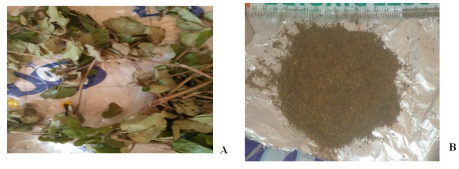
Figure 1. Leaves (A) and Powder (B) of Cochlospermum planchonii.
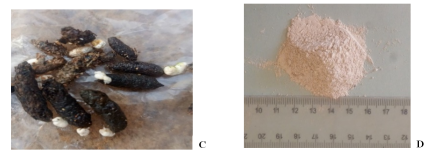
Figure 2. Feces (C) and powder from the white tips (D) of Agama agama.
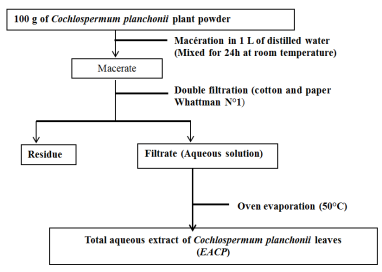
Figure 3. Extraction diagram of Cochlospermum planchonii leaves.
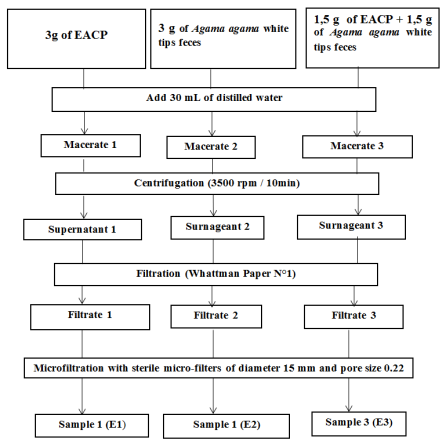
Figure 4. Sample collection diagram [12].
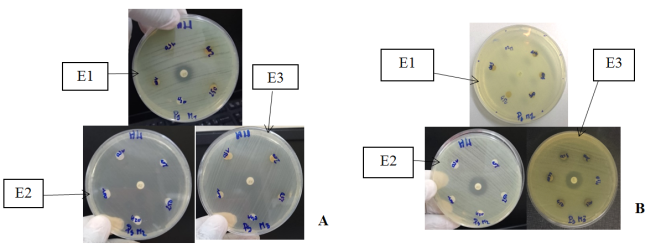
Figure 5. Photographs showing the inhibition zones of samples E1, E2 and E3 against Pseudomonas aeruginosa with a concentration range of 100 mg/mL to 250 mg/mL (A) and concentration range of 300 mg/mL to 500 mg/mL (B).
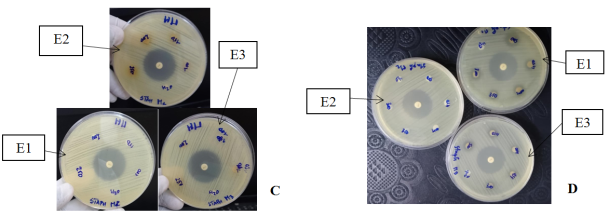
Figure 6. Photographs showing the inhibition zones of samples E1, E2 and E3 against Staphylococcus aureus with concentration range of 100 mg/mL to 250 mg/mL (C) and concentration range of 300 mg/mL to 500 mg/mL (D).



 Share This Article
 Twitter
 Linked In
 Facebook
 Copy
Copy Download